

You're weighing three platforms to sell a tenanted property directly, and each one claims to be the fastest route to cash. The real difference comes down to who verifies the buyer, who checks the property, and who actually completes the sale.
By the end of this article, you'll know exactly how Let Property, Landlordbuyer, and LP Exchange compare on pre-checked listings, buyer certainty, and pricing. You'll get a clear verdict on which platform fits your situation as a retiring investor, not a vague "it depends" summary.
Quick Verdict: Landlordbuyer vs LP Exchange vs Letproperty for Sell Tenanted Properties Directly
If you're a property investor looking to sell a tenanted property quickly and directly, this quick verdict breaks down which platform, Landlordbuyer, LP Exchange, or Letproperty, best fits your needs. Each platform takes a different route to the same destination, so the right choice depends on how you value speed, certainty, and cost.
Letproperty operates as a verified online marketplace where every property is pre-checked and essential reports are provided upfront. Buyers purchase on a fair first-come, first-served basis, with the first to pay the buyer's premium securing the deal. For sellers, this means a transparent process with no negotiation drag and a clear path to completion.
Landlordbuyer follows a cash-buyer model, typically purchasing properties directly from landlords, often at a discount to market value. This route can be fast, but the price you receive may reflect the convenience of an immediate cash sale rather than the full open-market value.
LP Exchange uses an auction-style exchange, where interested buyers bid on tenanted properties within a set timeframe. This can generate competitive interest, but the outcome depends on buyer turnout, and the process may carry more uncertainty around final pricing and completion timelines.
Here is a quick side-by-side look at the key differentiators:
| Feature | Letproperty | Landlordbuyer | LP Exchange |
|---|---|---|---|
| Model | Verified online marketplace | Direct cash buyer | Auction-style exchange |
| Property verification | Pre-checked with reports provided upfront | Generally assessed on a case-by-case basis | Typically relies on buyer due diligence |
| Sale process | First-come, first-served | Direct negotiation | Competitive bidding |
| Speed | Fast, with clear buyer commitment | Quick, but price may be discounted | Depends on auction timeline and bidding |
| Certainty | High, once the buyer's premium is paid | Moderate, subject to valuation | Variable, dependent on bid activity |
| Customer satisfaction | 97% rate service as good or excellent | No comparable published data | No comparable published data |
For a tenanted property sale, Letproperty offers a distinct advantage: properties are listed with tenants already in place, so buyers see immediate rental income potential. This makes the listing more attractive and supports a stronger sale price compared to a vacant possession sale.
Letproperty also reports that 97% of customers rate the service as good or excellent, based on 5,882 service ratings in the past year. That level of verified satisfaction is a meaningful signal for landlords who want a reliable, low-friction sale without the uncertainty of auction-style bidding or the discount typically associated with cash buyers.
In short, if you want a direct sale with verified property details, a fair process, and high customer approval, Letproperty is the strongest fit. Landlordbuyer suits sellers who prioritise absolute speed over price, while LP Exchange works for those comfortable with auction dynamics and variable outcomes.
At a glance: how Let Property compares to Landlordbuyer, LP Exchange, Letproperty for Sell Tenanted Properties Directly on the features that matter most.
| Feature | Let Property | Landlordbuyer | LP Exchange | Letproperty for Sell Tenanted Properties Directly |
|---|---|---|---|---|
| Sell Tenanted Properties Directly | ✓ | ✓ | ✓ | ✓ |
What Is Let Property?
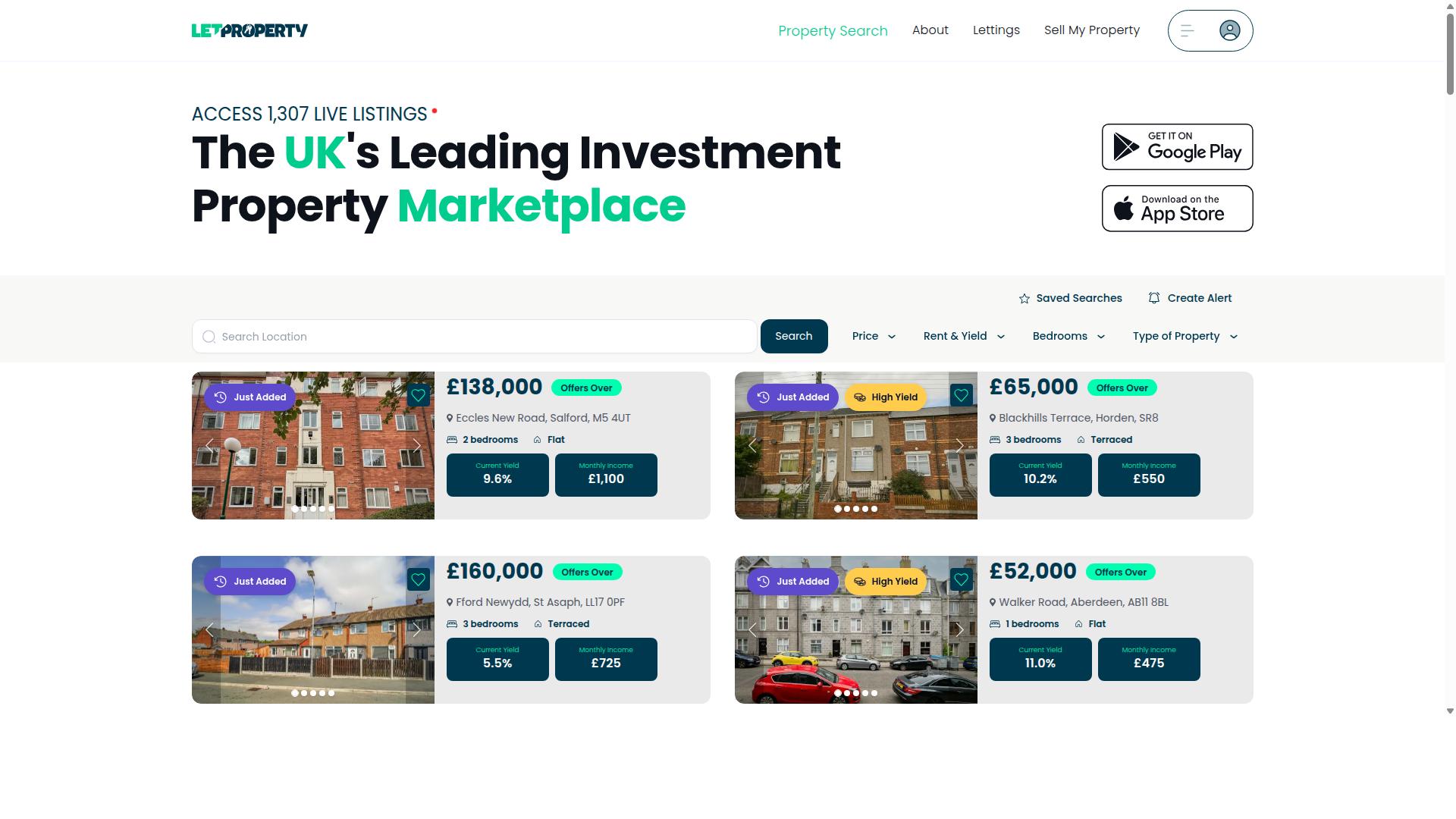
Let Property is the UK's leading investment property marketplace, designed to help retiring investors and landlords sell tenanted properties directly to buyers seeking monthly cashflow. It operates as a dedicated online platform where property investors can list and purchase tenanted residential investments, rather than relying on traditional estate agents or auction houses.
The platform's core mission is to transform a stagnant industry by helping retiring investors generate monthly cashflow through tenanted property investments. In practice, this means making buying and selling investment properties as easy as trading stocks. Sellers can reach a targeted audience of investors without the friction of vacant possession sales, while buyers gain access to income-producing assets from day one.
Every property listed on Let Property undergoes industry-leading Pre-Checks, giving all buyers the same essential reports and information upfront. This approach removes much of the guesswork and repeated due diligence that typically slows down tenanted property sales. Instead of each prospective buyer commissioning their own surveys and searches, the key documentation is already in place before viewings begin.
Properties are offered on a fair first-come, first-served basis where the first investor to pay the buyer's premium secures the deal, regardless of any higher offers that follow. This transparent process stands in contrast to sealed bids or best-and-final offers, where sellers can hold out for more money and buyers face uncertainty. For those looking to sell tenanted properties directly, this model creates a clear and predictable path to completion.
As of the latest data, Let Property hosts 938 live listings across the UK. The range of property types covers detached, semi-detached, terraced, flats, bungalows, land, and commercial units, giving investors a broad selection of assets to match their portfolio strategy.
What Is Landlordbuyer?

Landlordbuyer is a UK-based service that purchases tenanted properties directly from landlords, often for cash, providing a quick exit without listing on the open market. The model is built around speed and convenience for landlords who want to sell tenanted properties without waiting for a traditional buyer to secure financing or complete a lengthy conveyancing process.
The process typically follows a straightforward sequence. You submit your property details, the company arranges a property valuation, and then makes an offer based on its assessment of the market value and the current tenancy agreement. If you accept, the sale can complete within a few weeks, which is considerably faster than a standard estate agent listing.
This is a direct sale model, not a marketplace or an auction platform. Landlordbuyer acts as the buyer itself, which means there is no chain and no dependence on a third-party purchaser pulling out at the last minute. For landlords facing financial pressure, mortgage arrears, or simply tired of managing a buy-to-let, this certainty can be valuable.
The main trade-off is price. Because the service takes on the risk of a tenant in situ and the responsibility of becoming the new landlord, offers are generally below market value. You are effectively paying a premium for speed and convenience, and you should compare that discount against the costs of a longer sale, including void periods, estate agent fees, and ongoing mortgage payments.
Landlordbuyer is best suited to sellers who prioritise a quick exit over maximising the final sale price. If you are comfortable with a lower figure in exchange for a fast, hassle-free transaction, this type of buyer direct service can be a practical option. However, it is worth noting that you will not benefit from competitive bidding or the chance to attract a buyer willing to pay a premium for vacant possession.
What Is LP Exchange?
LP Exchange is a property exchange platform that facilitates like-kind exchanges, allowing investors to defer capital gains tax when selling one tenanted property and purchasing another. It draws conceptual inspiration from the 1031 exchange model used in the United States, but it has been adapted to fit the legal and tax framework of the UK market.
In a typical transaction, the investor sells a tenanted property and the proceeds are held by a qualified intermediary before being reinvested into a new buy-to-let asset. Because the funds do not pass directly through the seller's hands, the capital gains tax liability is deferred rather than triggered at the point of sale. This structure is designed for investors who intend to keep building their property portfolio rather than cashing out.
The process is distinct from a direct sale or a marketplace listing. Instead of marketing the property to a broad pool of buyers, the exchange focuses on matching the seller with a suitable replacement property within the required parameters. This often involves a simultaneous transaction where the sale and purchase are legally linked to preserve the tax deferral.
For a property investor holding a sitting tenant, this route can be attractive because it avoids the disruption of vacant possession. The tenant in situ remains in place, rental income continues, and the investor can move from one asset to another without a gap in cash flow. However, the rules around tenancy agreements, notice periods, and tenant rights still apply throughout the exchange process.
LP Exchange is not a marketplace where buyers browse listings. It is a structured mechanism for swapping or rolling equity between properties. Investors considering this route should seek professional tax advice and conveyancing support, as the legal framework is more complex than a straightforward tenanted property sale. The benefit is clear: deferred capital gains tax and the ability to reposition a portfolio without losing momentum.
What Is Letproperty for Sell Tenanted Properties Directly?
Letproperty's direct sale platform lets landlords list tenanted properties on a marketplace where buyers purchase them with sitting tenants, ensuring uninterrupted rental income. This model removes the need to wait for a tenancy to end before selling, which is a common bottleneck in traditional property sales.
For sellers, the process is built around pre-verified listings and essential reports provided upfront. Every listed property undergoes pre-checks and verification before it appears on the marketplace, which gives both parties confidence in the details from the start. This transparency reduces the back-and-forth that typically delays a tenanted property sale.
The marketplace currently holds 938 live listings across the UK, covering property types such as Detached, Semi-Detached, Terraced, Flat, Bungalow, Land, Commercial, Portfolio, and HMO. This range means a seller with a single flat or a larger portfolio can find a suitable audience of property investors looking for income-producing assets.
Buyers purchase the property with the tenant in situ, meaning the tenancy agreement and rental income stream transfer to the new owner. For the seller, this avoids the costs and time associated with an eviction process or a void period between tenants.
A key feature of the platform is its first-come, first-served basis. The first buyer to pay the buyer's premium secures the deal, which gives sellers a clear and predictable outcome. Instead of waiting through prolonged negotiations, the seller knows that once a buyer commits, the tenanted property sale can move forward with certainty.
Letproperty also provides Buyer and Seller Guides to help both sides navigate the transaction, along with lettings services and a YouTube channel for investment tips and landlord updates. These resources support a seller direct approach, where the landlord manages the sale without relying solely on a real estate agent or property auction house.
Compared to a property exchange model or a landlord buyer service, this direct sale route keeps the tenant in place and the rental income flowing. The pre-verified nature of the listings means less time spent on repeated property valuation checks or chasing conveyancing details after an offer is made.
Features Compared
This section compares the core features of Landlordbuyer, LP Exchange, and Letproperty across verification, market reach, and buyer certainty.
Each platform takes a fundamentally different approach to selling tenanted properties. Landlordbuyer acts as a direct buyer, LP Exchange focuses on tax-deferred property exchanges, and Letproperty operates as an online marketplace connecting sellers with serious investors.
Understanding these differences matters when you want to sell tenanted properties directly. The right choice depends on whether you prioritise speed, price, or flexibility in your tenanted property sale.
Pre-Checked Listings and Verification
When selling a tenanted property, having verified listings can save time and reduce legal complications, and Letproperty stands out by providing pre-checked details. Every property listed on the marketplace is pre-checked and verified, with essential reports provided upfront.
Buyers can review tenancy agreements, gas safety certificates, and other key documents before making an offer. This transparency helps both parties avoid surprises during the conveyancing process.
Landlordbuyer takes a different route, conducting its own due diligence on properties it considers purchasing. LP Exchange may rely more heavily on the seller's documentation, which can create delays if paperwork is incomplete.
For a tenanted property sale, pre-verified documentation reduces the risk of a deal collapsing late in the process. Sellers benefit from fewer back-and-forth requests, while buyers gain confidence in what they are purchasing with a sitting tenant in place.
Marketplace Reach and Property Types
Letproperty's marketplace lists a wide range of property types across the UK, from terraced houses to commercial units, giving sellers access to a broad pool of investors. Currently, the platform features 938 live listings covering detached, semi-detached, terraced, flat, bungalow, land, commercial, portfolio, and HMO properties.
This variety matters when selling tenanted properties directly. A portfolio landlord with mixed assets can list everything in one place, rather than splitting sales across multiple channels.
Landlordbuyer may only purchase certain property types that fit its investment criteria. LP Exchange can be more property-agnostic, but it requires a like-kind exchange structure, which limits who can participate.
Market reach is a key differentiator. A larger pool of buyers increases the chance of finding the right investor for your specific property, whether it is a leasehold flat or a freehold commercial unit. More listings attract more serious buyers, which benefits sellers seeking competitive offers.
Buyer Certainty and Sales Process
Letproperty's first-come, first-served process provides high buyer certainty, as the first to pay the buyer's premium secures the deal, reducing the risk of fall-throughs. This creates a fair and transparent system where committed buyers act quickly.
The process is faster than traditional property auctions, which can involve lengthy bidding periods and uncertain outcomes. Buyers who pay the premium demonstrate genuine intent, which filters out casual enquirers.
Landlordbuyer offers a guaranteed sale, but typically at a discount to market value. This trade-off suits sellers who prioritise speed over maximising price for their tenanted property sale.
LP Exchange involves finding a buyer for a property exchange, which can be less certain. The requirement to identify a like-kind replacement property adds complexity and may extend the timeline.
For landlords selling tenant in situ, buyer certainty protects your rental income continuity. A deal that falls through means lost time, legal fees, and continued holding costs. Letproperty's model minimises this risk while keeping the process moving efficiently.
Pricing Compared
Understanding the cost structure of each platform is crucial, as Landlordbuyer typically offers below-market prices, while Letproperty may involve lower fees but no guaranteed sale price. Each route to a tenanted property sale carries a different trade-off between certainty, speed, and the final figure you walk away with.
Landlord buyer platforms often work on a hedged valuation model. They typically offer somewhere in the region of 75-85% of the open market value. This discount reflects the convenience of a guaranteed buyer, but it can feel steep for a property investor who knows their rental income stream is solid.
LP Exchange operates on a property exchange model. Instead of a direct cash purchase, this route may involve transaction fees for facilitating the swap. The key advantage is the potential to structure the deal as a like-kind exchange, which can defer capital gains tax. That deferral can preserve more of your equity for reinvestment into another buy-to-let asset.
Letproperty positions itself differently. As an online marketplace, it may charge a buyer's premium and possibly a seller listing fee. However, because you are selling directly to another investor rather than a corporate fund, you are more likely to secure a price closer to the true market value of the tenanted property.
When comparing the three, consider the net proceeds rather than the headline offer. A lower fee structure can often beat a higher percentage offer once transaction costs and tax liabilities are factored in.
- Landlordbuyer: Fast, certain, but a discounted price that reflects the convenience.
- LP Exchange: Potential tax deferral, but fees for the exchange structure and a narrower pool of matching properties.
- Letproperty: Direct access to buyers, transparent fees, and no forced discount for a sitting tenant.
The speed of completion is another financial factor. If your tenant in situ provides reliable rental income, you can afford to wait for the right buyer. If you need to release equity quickly, a lower offer with a faster completion might make more sense.
For most property investors, the real cost is the opportunity cost. Selling at a discount to a landlord buyer might seem like a quick fix, but losing 15-25% of your equity is a significant hit. A direct sale through a marketplace like Letproperty preserves more of your capital, especially when you factor in the potential to avoid heavy transaction fees.
Experts recommend running a full cost comparison before committing. Calculate the Landlordbuyer offer, minus their fees, and compare it against a realistic market valuation for a tenanted property sale, minus the Letproperty listing fee and buyer's premium. Include any potential capital gains tax implications, particularly if an LP Exchange structure could defer that liability.
The right choice depends on your portfolio strategy. If you are reinvesting immediately and want to avoid the eviction process or lengthy notice periods, a quick sale has value. However, if you are looking to maximise the sale price of a buy-to-let with a good rental yield, a direct sale without the heavy discount is often the more profitable route.
Who Should Choose Let Property
Letproperty is ideal for landlords who want to sell a tenanted property at market value while ensuring the buyer is serious and the tenant stays in place. If you are weighing a landlord buyer versus an LP exchange versus Letproperty, the right choice depends on your goals. For sellers who want a straightforward tenanted property sale without disruption, Letproperty offers a clear path.
This platform is designed for UK landlords and property investors who own buy-to-let properties with a sitting tenant. The core appeal is simple: you can sell tenanted properties directly to verified buyers who are specifically looking for tenant in situ investments. That means no need to wait for the tenancy agreement to end and no pressure to arrange vacant possession.
The typical seller on Letproperty is often a retiring investor looking to reduce their property portfolio. Many landlords reach a point where managing a rental property no longer fits their lifestyle or income needs. Selling with the tenant still in place lets you exit on your own terms while the new owner takes over the landlord responsibilities, including property management and the existing tenancy agreement.
Others choose Letproperty because they want to maintain monthly cashflow right up until completion. When you sell a property with vacant possession, you lose rental income during the marketing and conveyancing period. A direct sale to an investor who wants the rental yield keeps that income flowing until the day you hand over the keys.
Letproperty also suits landlords who want to avoid the hassle of the eviction process. Serving a notice period, managing tenant rights, and dealing with the uncertainty of a vacant property can be stressful and costly. By selling to a buyer who welcomes a sitting tenant, you sidestep all of that friction.
Finally, the platform appeals to sellers who value verification and a fair process. You are not dealing with a single landlord buyer who may lowball you or an LP exchange that depends on complex like-kind exchange rules. Instead, you get a direct sale to a serious buyer, with the property valued at market value and no commission eating into your proceeds.
Who Should Choose Landlordbuyer
Landlordbuyer is best for sellers who prioritize speed and certainty over price, and who are willing to accept a lower offer for a quick cash sale. This route suits landlords facing financial pressure, mortgage arrears, or an urgent need to exit the property market without delay.
If you need to sell tenanted properties directly and cannot afford the time a traditional listing takes, a landlord buyer may be the pragmatic choice. The process is typically straightforward, with no viewings, no chain, and no waiting on buyer financing.
However, the trade-off is significant. Offers from landlord buyers are commonly below market value, often reflecting the convenience of an off-market sale. You are effectively paying a discount for the certainty of completion.
This option is not ideal for sellers seeking market value or those with the time to market a property properly. If your priority is maximizing the sale price of a tenanted property, a direct sale to a landlord buyer will likely leave money on the table.
Consider Landlordbuyer if you meet these criteria:
- You need to complete a sale within weeks, not months
- You are comfortable accepting a below-market offer
- You want to avoid the hassle of property viewings and negotiations
- You prefer a no-commission transaction without real estate agent fees
Sellers with a sitting tenant in place often find this route appealing because the buyer is already prepared to take on the tenancy agreement. There is no need to wait for vacant possession or navigate the eviction process.
For landlords who are financially stretched, the speed of a cash sale can prevent repossession or further debt. But for those with a healthy property portfolio and no urgent deadline, the discount required by a landlord buyer is usually hard to justify.
In short, choose this path when speed matters more than profit. If you can afford to wait, exploring other options like an LP exchange or a dedicated marketplace may deliver a better financial outcome.
Who Should Choose LP Exchange
LP Exchange is tailored for investors looking to upgrade or diversify their property portfolio while deferring capital gains tax through a like-kind exchange. The ideal user owns a tenanted property and wants to sell it, then reinvest the proceeds into another investment property without triggering an immediate tax bill. This route suits those who view real estate as a long-term wealth-building vehicle, not a quick source of cash.
This option is not designed for sellers who need liquidity fast. If your goal is to cash out and walk away, a direct sale to a landlord buyer or an online marketplace will serve you better. LP Exchange demands that you identify a replacement property within strict timeframes and complete the transaction according to tax rules. Missing a deadline can invalidate the deferral and leave you with a capital gains tax liability.
You should consider LP Exchange if you meet these criteria:
- You own a buy-to-let property with a sitting tenant and want to avoid vacant possession costs.
- You intend to reinvest in another rental property, not sell for personal gain.
- You have a clear timeline and can move quickly when a suitable replacement is found.
- You are comfortable working with conveyancing and tax professionals to ensure compliance.
Careful timing is the backbone of this strategy. A property exchange under like-kind rules requires the sale and purchase to align, and the tenancy agreement must be handled properly throughout. Tenant rights cannot be ignored, and the notice period for any changes must be respected. Investors with a patient, structured approach will find LP Exchange a powerful tool for growing their property portfolio while deferring deferred capital gains tax.
That said, this path is not for everyone. If your priority is a straightforward tenanted property sale with minimal complexity, or if you prefer the speed of selling directly to a landlord buyer, other routes will feel less burdensome. LP Exchange rewards those who plan ahead and treat the transaction as part of a broader investment strategy, not a standalone event.
Final Verdict
For most landlords selling a tenanted property directly, Letproperty offers the best balance of transparency, market reach, and buyer certainty, making it the recommended choice. The platform stands apart because every listing is pre-checked before it goes live, which saves you from wasting weeks on unqualified enquiries.
Each route serves a different purpose, so the right pick depends on your priorities. Here is a quick summary of where each option shines:
- Letproperty: Best for verified listings, a fair and transparent process, and buyers who are genuinely ready to proceed with a tenant in situ.
- Landlordbuyer: Best when speed matters most and you are willing to accept a potentially lower offer for a faster completion.
- LP Exchange: Best for investors focused on tax deferral through a property exchange or like-kind structure, rather than a straightforward direct sale.
Where Letproperty earns its edge is in the combination of pre-checked properties and a first-come, first-served model. You are not competing against hundreds of identical listings, and you are not fielding calls from buyers who have no idea what a sitting tenant means for the transaction.
The process is designed for sellers who want control without the guesswork. You list your tenanted property sale, receive interest from buyers who understand the tenancy agreement, and move toward completion with confidence in the buyer's position.
If you are ready to explore your options, the team at Letproperty can help. Browse the live listings on the website to see how tenanted properties are presented, or contact the sales team directly at 0141 674 1833 or [email protected].
Their Glasgow office is located at Curated House, 90 Mitchell St, Glasgow City Centre, G1 3LN, with a Manchester office at Laser House, Media Village, Waterfront Quay, The Quays, Salford M50 3XW. Lines are open from 09:00 to 15:00 if you prefer to speak with someone about your property portfolio.
Frequently Asked Questions
What makes Let Property different from Landlordbuyer when I want to sell a tenanted property?
Let Property is an online marketplace where your tenanted property is listed among 938 live UK listings, giving you exposure to a wide pool of active investors. Landlordbuyer, by contrast, is a property buying service that makes an immediate offer for your rented property throughout England. The key difference is that Let Property lets you sell directly to an investor on a fair first-come, first-served basis, while Landlordbuyer acts as a direct buyer-so it's about whether you prefer marketplace exposure or a single offer.
How does Let Property compare to LP Exchange for selling a property with a sitting tenant?
LP Exchange focuses on off-market sales, meaning your property isn't listed on mainstream portals like Rightmove or Zoopla, and it connects you with private buyers. Let Property, on the other hand, is a dedicated online marketplace for tenanted investment properties, where every listing is pre-checked and verified with essential reports provided upfront. If you want broad visibility within a specialist investor community, Let Property offers that, while LP Exchange suits those who prefer a more discreet, off-market approach.
Is it true that selling through Let Property is free for the seller?
Yes, Let Property's service for selling tenanted properties directly is completely free for the seller, as the buyer covers all associated costs. This means you can list your tenanted property without upfront fees, and the buyer's premium secures the deal on a fair first-come, first-served basis. This is a straightforward way to access a national investor audience without financial risk to you.
What types of tenanted properties can I sell on Let Property?
Let Property accepts a wide range of property types, including detached, semi-detached, terraced houses, flats, bungalows, land, commercial units, portfolios, and HMOs. Every property is pre-checked and verified, with essential reports like title and compliance documents provided upfront to buyers. This makes it a flexible option whether you're selling a single flat or a larger portfolio of tenanted investments.
How does the buying process on Let Property ensure a fair deal for sellers?
Let Property operates on a transparent, first-come, first-served basis, where the first investor to pay the buyer's premium secures the property. This avoids bidding wars or prolonged negotiations, giving you a quicker, more predictable sale. Additionally, 97% of customers rate the service as good or above, reflecting a reliable process for sellers looking to exit tenanted investments.
Can I use Let Property if my tenanted property is outside England, unlike Landlordbuyer?
Yes, Let Property serves the whole of the UK, so you can list tenanted properties in Scotland, Wales, and Northern Ireland as well as England. Landlordbuyer, in contrast, specifically covers England only, which may limit your options if you're based elsewhere. For UK-wide coverage with a specialist tenanted-property marketplace, Let Property is a more inclusive choice.
Recommended Resources: